Learn How to Describe Your Daily Routine in French
In any language, it is important to know how to describe your daily activities! In this lesson, we will learn how to describe your daily routine in French, illustrated with pictures, example sentences, and audio for each word.
When speaking with a French speaker, you are likely going to want to refer to your daily routine, so learning vocabulary about this topic is a good addition to your learning process.
Knowing these words and phrases is also excellent for listening to other people, since they are likely to talk about their daily routines and you are going to want to understand what they are saying.
Want to practice with a real French tutor? Get $10 USD in italki credits with a $20 purchase (credited within 48 hours).
Jump to a category: Morning Routine · During the Day · Evening Routine · More Expressions · FAQ
Morning Routine – La routine du matin
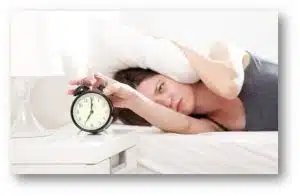
Se réveiller — To wake up
Je me réveille à 7 heures du matin. = I wake up at 7 in the morning.
Se lever du lit — To get up from bed
Je me lève du lit à 8 heures. = I get up from bed at 8 o’clock.
Faire son lit — To make the bed
Je fais mon lit tous les jours. = I make my bed every day.
Aller aux toilettes — To go to the toilet
Je vais aux toilettes. = I go to the toilet.

Se brosser les dents — To brush your teeth
Je me brosse les dents trois fois par jour. = I brush my teeth three times a day.
Se laver le visage — To wash your face
Je me lave le visage avec de l’eau froide. = I wash my face with cold water.
Se doucher — To shower
Je me douche pendant 15 minutes. = I shower for 15 minutes.
S’habiller — To get dressed
Je m’habille en 5 minutes. = I get dressed in 5 minutes.
Se maquiller — To put on make-up
Elle se maquille pendant 1 heure. = She puts on make-up for 1 hour.

Prendre le petit-déjeuner — To have breakfast
J’aime prendre un petit-déjeuner. = I like having breakfast.
During the Day – Pendant la journée
Aller à l’école — To go to school
Je vais à l’école en bus. = I go to school by bus.
Aller au travail — To go to work
Je vais au travail à 9h. = I go to work at 9am.
Déjeuner — To have lunch
Je déjeune à midi. = I have lunch at noon.
Rentrer à la maison — To go home
Je rentre à la maison à 19h. = I go home at 7pm.

Arriver à la maison — To arrive home
J’arrive à la maison à 20h. = I arrive home at 8pm.
Evening Routine – La routine du soir
Faire ses devoirs — To do homework
Je n’aime pas faire mes devoirs. = I don’t like doing my homework.
Dîner — To have dinner
Je dîne avec mes parents. = I have dinner with my parents.
Regarder la télé — To watch TV
Je regarde la télé avec ma copine. = I watch TV with my girlfriend.
Écouter de la musique — To listen to music
J’aime écouter de la musique. = I like listening to music.
Aller au lit — To go to bed
Je vais au lit à 23h. = I go to bed at 11pm.

Dormir — To sleep
Je dors vers 23h30. = I fall asleep around 11:30pm.
More Expressions (Without Audio)
Extra daily routine phrases — commuting, chores, and leisure activities.
- Se rendre au travail en voiture = Drive to work
- Prendre un taxi = Take a taxi
- Attendre le bus = Wait for the bus
- Préparer le dîner = Prepare dinner
- Faire la lessive / Faire le linge = Do the laundry
- Accrocher les vêtements = Hang the clothes
- Repasser les vêtements = Iron the clothes
- Plier le linge = Fold the laundry
- Prendre un bain = Take a bath
- Se brosser les cheveux = Brush your hair
- Surfer sur internet = Surf the net
- Aller faire les courses = Go shopping
- Faire du sport = Exercise
- Laver la voiture = Wash the car
- Jouer avec des amis = Play with friends
- Sortir avec des amis = Go out with friends
- Prendre des photos = Take pictures
- Jouer de la guitare = Play guitar
- Lire les nouvelles = Read the news
- Arroser les plantes = Water the plants
- Aller se promener = Go for a walk
- Nourrir le chien = Feed the dog
- Nourrir le chat = Feed the cat
- Promener le chien = Walk the dog
- Sortir les poubelles = Take out the trash
- Balayer le sol = Sweep the floor
- Faire la vaisselle = Wash the dishes
- Nettoyer les fenêtres = Clean the windows
- Ramasser les feuilles = Rake the leaves
- Tondre la pelouse = Cut the grass
Frequently Asked Questions
What’s the difference between se lever and se réveiller?
Se réveiller means to wake up (your eyes open), while se lever means to get out of bed. You can be awake without getting up yet.
Why is déjeuner sometimes “lunch” and sometimes “breakfast”?
In France, déjeuner means lunch and petit-déjeuner means breakfast. In Québec, déjeuner is used for breakfast instead.
Are reflexive verbs like se doucher or s’habiller always used with “se”?
Yes — these are reflexive verbs, so they always need a reflexive pronoun (je me douche, tu t’habilles, il se lève, etc.) that agrees with the subject.
How do I talk about my routine using time expressions?
Use “à + time” for a specific hour (à 7 heures) or adverbs like le matin (in the morning), l’après-midi (in the afternoon), and le soir (in the evening) for general parts of the day.
You can also watch our video to learn how to describe your daily routine in French:
We hope this lesson was helpful for you. If you have any questions, please leave a comment.