
Learn the weather vocabulary in French
The weather is a topic that is often discussed, regardless of the language spoken. This is likely because the weather has a significant impact on our daily lives.
In this lesson, you will learn about some common French words related to the weather but also to natural disasters, organized by category with more than 100 terms in total.
This will help you to talk about the weather with native speakers, as well as understand what they are saying when they discuss this topic. It is also useful if you like to watch or read the French news.
In French, there are many words that are used to describe the weather, as you will see below, including nouns, adjectives, and verbs.
🎥 Watch the video lesson
Here is the same weather vocabulary out loud, with my voice and example sentences.
Jump to a category:
- 🗣️ Talking About the Weather
- 🌧️ Rain
- ❄️ Snow
- 🧊 Black Ice
- 🌨️ Hail
- ⛈️ Storms
- 💨 Wind
- ☁️ Clouds
- 🌫️ Fog and Mist
- 🌡️ Heatwave
- ⚡ Thunderstorm
- 🌊 Flood
- 🌪️ Natural Disasters
- 📖 Complete Vocabulary Reference Table
- ❓ FAQ
🗣️ Talking About the Weather
| French | English |
|---|---|
| Le temps | the weather |
| La météo / les prévisions météo | the weather / weather forecast |
| Nous avons eu du beau temps pendant les vacances. | We had beautiful weather during the holidays. |
| Il a fait beau ce week-end. | The weather was nice this weekend. |
| Il a fait froid mardi. | It was cold on Tuesday. |
| Il a fait chaud à Marseille cet été. | It was hot in Marseille this summer. |
| Des intempéries ont été annoncées pour lundi. | Bad weather was forecast for Monday. |
| La météo s’annonce mauvaise pour la semaine prochaine. | The weather forecast is bad for the next week. |
🌧️ French weather words about the rain
Noun:
La pluie = the rain. De fortes pluies se sont abattues sur Paris mardi soir. = Heavy rain fell on Paris on Tuesday evening.
Adjective:
Pluvieux / pluvieuse = rainy. Un temps pluvieux est attendu ce matin. = Rainy weather is expected this morning. C’est une journée pluvieuse. (feminine form) = It is a rainy day.
Verb:
Pleuvoir = to rain. Il a plu toute la nuit. = It rained all night. Il pleut tous les jours depuis deux semaines. = It has been raining every day for two weeks.
Extra:
Des pluies diluviennes = torrential rains / heavy rains. Des pluies torrentielles = torrential rains / heavy rains. La mousson = the monsoon.
❄️ French weather words about the snow

Noun:
La neige = the snow. Les premières neiges sont tombées ce week-end en Isère. = The first snow fell this weekend in Isère.
Adjective:
Neigeux / neigeuse = snowy. Un temps neigeux est attendu ce matin. Une semaine très neigeuse s’annonce. (feminine form) = A very snowy week is coming.
Verb:
Neiger = to snow. Il a neigé toute la journée. = It snowed all day. Il neige souvent en décembre. = It often snows in December.
Extra:
Enneiger / être enneigé (verb) = cover in snow. La route était enneigée ce matin. = The road was covered in snow this morning. Des flocons de neige = snowflakes.
🧊 French weather words about the black ice

Noun:
Le verglas = the black ice / icy. Roulez doucement, il y a du verglas ce matin. = Drive slowly, it’s icy this morning.
Adjective:
Verglacé / Verglacée = icy. Une voiture a glissé sur le pont verglacé. = A car slid on the icy bridge. Sois prudent, la route est verglacée. (feminine form) = Be careful, the road is icy.
Verb:
Verglacer / être verglacé = to be icy / to be covered with black ice. La route est souvent verglacée en hiver. = The road is often icy in winter.
🌨️ French weather words about the hail
Noun:
La grêle = the hail. La grêle s’est abattue sur un village. = Hail fell on a village.
Verb:
Grêler = to hail. Il a grêlé si fort qu’on a dû s’abriter. = It hailed so hard we had to take shelter.
Extra:
Des grêlons = hailstones. Des grêlons énormes ont endommagé plusieurs véhicules. = Huge hailstones damaged several vehicles.
⛈️ French weather words about the storm
| French | English |
|---|---|
| Une tempête | a storm |
| Une tempête de grêle | a hailstorm |
| Une tempête de pluie | a rainstorm |
| Une tempête de neige | a snowstorm |
| Une tempête de sable | a sandstorm |
| Une tempête de poussière | a dust storm |
💨 French weather words about the wind
Noun:
Le vent = the wind. Le vent souffle fort ce matin. = The wind is blowing strong this morning.
Adjective:
Venteux = windy. Un temps venteux est attendu ce week-end. Les plages venteuses attirent les surfers. (feminine form) = The windy beaches attract surfers.
Verb:
Venter = be windy. Il vente souvent plus fort au sommet des montagnes. = It is often more windy on top of the mountains.
Extra:
Une rafale = a gust. Une puissante rafale a arraché mon toit. = A powerful gust ripped my roof off. La brise = the breeze. Une brise souffle du lac vers les rives. = A breeze blows from the lake to the shore.
☁️ French weather words about the clouds
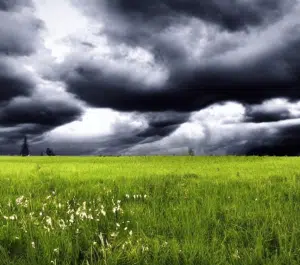
Noun:
Le nuage / les nuages = the cloud / clouds. J’adore regarder les nuages. = I like to watch the clouds.
Adjective:
Nuageux = cloudy. Le temps est très nuageux à Londres. = The weather is very cloudy in London. Une journée nuageuse est attendue demain. (feminine form) = A cloudy day is expected tomorrow.
Extra:
Le ciel = the sky. Un arc-en-ciel = a rainbow.
🌫️ French weather words about the fog and the mist
Noun:
Le brouillard = the fog. Un épais brouillard a recouvert Paris ce matin. = Thick fog blanketed Paris this morning.
La brume = the mist. La brume a recouvert ma maison hier matin. = The mist covered my house yesterday morning.
Adjective:
Brumeux / brumeuse = misty. Faites attention sur la route, le temps est brumeux. = Be careful on the road, the weather is misty/foggy. Nous avons eu une matinée brumeuse. (feminine form) = We had a misty morning.
🌡️ French weather words about the heatwave
La canicule / la vague de chaleur = the heatwave. L’Espagne est touchée par la canicule depuis plusieurs mois. = Spain has been hit by a heat wave for several months. L’arrivée d’une vague de chaleur a fait grimper les températures. = The arrival of a heat wave has caused temperatures to rise.
⚡ French weather words about the thunderstorm
Un orage = a thunderstorm. Le tonnerre = the thunder. Un éclair = a lightning bolt / lightning. La foudre = the lightning (we use “foudre” when a lightning bolt strikes either the land surface or an aircraft).
🌊 French weather words about the flood
Noun:
Une inondation = a flood / flooding. Le sud de la France est frappé par des inondations. = The south of France is hit by floods.
Adjective:
Inondé = flooded. Un parking inondé s’est effondré au Texas. = A flooded parking lot collapsed in Texas. Traverser une zone inondée est dangereux. (feminine form) = Crossing a flooded area is dangerous.
Verb:
Inonder = flood / inundate. De fortes pluies ont inondé la ville. = Heavy rainfall flooded the city.
🌪️ French words about natural disasters
| French | English |
|---|---|
| Une tempête tropicale | a tropical storm |
| Un ouragan | a hurricane |
| Un cyclone | a cyclone |
| Un typhon | a typhoon |
| Une avalanche | an avalanche |
| Une coulée de boue | a mudslide |
| Un éboulement | a rockslide |
| Un glissement de terrain | a landslide |
| Un feu de forêt | a wildfire |
| Un feu de broussailles | a brush fire |
| Un incendie | a fire |
| La sécheresse | the drought |
| Une tornade | a tornado |
| Une tornade de feu | a firenado |
| Un tourbillon de poussière/sable | a dust devil |
| Un tourbillon de feu | a fire devil |
| Un tremblement de terre / un séisme | an earthquake |
| Une trombe marine | a waterspout |
| Un tsunami | a tsunami |
Hurricanes, cyclones, and typhoons are all types of tropical storms — the word used depends on where in the world the storm forms.
📖 Complete Weather Vocabulary Reference Table
Here is the full list of weather and natural disaster vocabulary from this lesson, organized by category for quick reference.
☀️ Sky, Light & Sun
| French | English |
|---|---|
| l’arc-en-ciel (n.m.) | rainbow |
| le ciel (n.m.) | sky |
| le coup de soleil (n.m.) | sunburn |
| l’éclair (n.m.) | lightning bolt |
| la foudre (n.f.) | lightning |
| le nuage (n.m.) | cloud |
| les rayons du soleil (n.m.pl.) | sun rays |
| le soleil (n.m.) | sun |
🌧️ Precipitation & Ice
| French | English |
|---|---|
| les flocons de neige (n.m.pl.) | snowflakes |
| le gel (n.m.) | frost |
| la gelée (n.f.) | frost |
| geler (verb) | to freeze |
| la gelure (n.f.) | frostbite |
| le givre (n.m.) | hoar / white frost |
| la grêle (n.f.) | hail |
| les grêlons (n.m.pl.) | hailstones |
| humide (adj.) | wet |
| la neige (n.f.) | snow |
| la pluie (n.f.) | rain |
| les précipitations (n.f.pl.) | precipitation |
| le verglas (n.m.) | black ice |
💨 Wind & Storms
| French | English |
|---|---|
| le blizzard (n.m.) | blizzard |
| la brise (n.f.) | breeze |
| le cyclone (n.m.) | cyclone |
| l’orage (n.m.) | thunderstorm |
| l’ouragan (n.m.) | hurricane |
| la rafale (n.f.) | gust |
| la tempête (n.f.) | storm |
| la tempête de grêle (n.f.) | hailstorm |
| la tempête de neige (n.f.) | snowstorm |
| la tempête de pluie (n.f.) | rainstorm |
| la tempête de poussière (n.f.) | dust storm |
| la tempête de sable (n.f.) | sandstorm |
| la tempête tropicale (n.f.) | tropical storm |
| le tonnerre (n.m.) | thunder |
| la tornade (n.f.) | tornado |
| la tornade de feu (n.f.) | firenado |
| le tourbillon de poussière/sable (n.m.) | dust devil |
| le tourbillon de feu (n.m.) | fire devil |
| le typhon (n.m.) | typhoon |
🌡️ Temperature & Heat
| French | English |
|---|---|
| la canicule (n.f.) | heatwave |
| la chaleur (n.f.) | heat |
| le chaud (n.m.) | hot |
| le froid (n.m.) | cold |
| la température (n.f.) | temperature |
| la vague de chaleur (n.f.) | heatwave |
🌫️ Fog & Visibility
| French | English |
|---|---|
| le brouillard (n.m.) | fog |
| la brume (n.f.) | mist |
| les intempéries (n.f.pl.) | bad weather |
🌪️ Natural Disasters
| French | English |
|---|---|
| l’avalanche (n.f.) | avalanche |
| la coulée de boue (n.f.) | mudslide |
| la crue éclair (n.f.) | flash flood |
| l’éboulement (n.m.) | rockslide |
| le feu de broussaille (n.m.) | brush fire |
| le feu de forêt (n.m.) | wildfire |
| le glissement de terrain (n.m.) | landslide |
| l’inondation (n.f.) | flood |
| la sécheresse (n.f.) | drought |
| le tremblement de terre / séisme (n.m.) | earthquake |
| la trombe marine (n.f.) | waterspout |
| le tsunami (n.m.) | tsunami |
📋 General Weather Terms
| French | English |
|---|---|
| la météo (n.f.) | weather / weather forecast |
| le parapluie (n.m.) | umbrella |
| les prévisions météo (n.f.pl.) | weather forecast |
| le temps (n.m.) | weather |
| le vent (n.m.) | wind |
Want to practice with a real French tutor? Get $10 USD in italki credits with a $20 purchase (credited within 48 hours).
❓ Frequently Asked Questions
What’s the difference between “le temps” and “la météo”?
Le temps is the general word for “weather” as a condition (Quel temps fait-il ? = What’s the weather like?). La météo specifically refers to the weather forecast or report — the information given by meteorologists, as in J’ai regardé la météo ce matin (I checked the weather forecast this morning). You’ll hear la météo used on the news and in weather apps, while le temps is used in everyday conversation about current conditions.
Why do the French use “il fait”, “il y a”, and “il” (alone) for different weather expressions?
French weather expressions follow three grammatical patterns depending on the type of description. Il fait + adjective is used for general conditions (il fait beau, il fait froid). Il y a + noun is used when naming something present in the sky or air (il y a du vent, il y a du brouillard). A single weather verb conjugated with il is used for precipitation (il pleut, il neige, il gèle). Mixing these up is a very common mistake — you can’t say “il est froid” to mean “it’s cold outside” the way you would in English with “to be.”
Are “un orage” and “une tempête” the same thing?
Un orage specifically refers to a thunderstorm, with thunder and lightning. Une tempête is the broader word for “storm” and is used for many types of severe weather, usually combined with another word to specify the type: une tempête de neige (snowstorm), une tempête de sable (sandstorm), une tempête tropicale (tropical storm). So every orage could loosely be described as a kind of storm, but not every tempête involves thunder and lightning.
What’s the difference between “un ouragan”, “un cyclone”, and “un typhon”?
These three words all describe the same meteorological phenomenon — a rotating tropical storm system — but French uses a different term depending on where in the world it forms. Un ouragan (hurricane) is used for storms in the Atlantic and Northeast Pacific. Un typhon (typhoon) is used for the Northwest Pacific, near Asia. Un cyclone is the term used in the Indian Ocean and South Pacific, including around Réunion and Madagascar, and is also the general scientific term for the phenomenon.
How do you form the past tense of weather verbs like “pleuvoir” and “neiger”?
Weather verbs like pleuvoir (to rain) and neiger (to snow) are impersonal verbs, meaning they’re only ever conjugated with il. In the passé composé, both use the auxiliary avoir: il a plu (it rained) and il a neigé (it snowed). In the imparfait, they become il pleuvait (it was raining / it used to rain) and il neigeait (it was snowing / it used to snow). These forms never change for gender or number since the subject is always the impersonal il.